

Fruit Juices
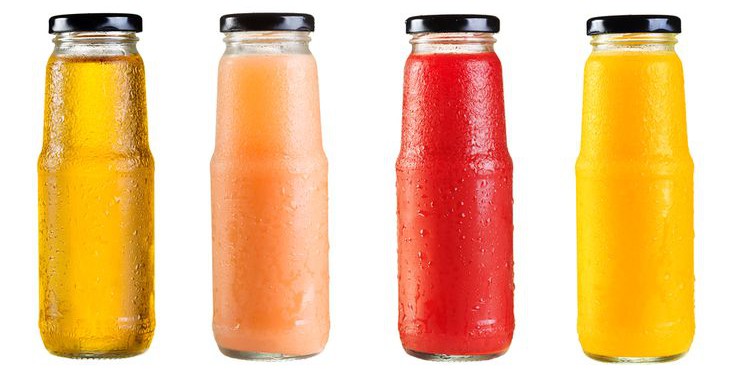
Let’s first address store-bought fruit juice. Commercial fruit juice is almost always pasteurized, which means that it’s been stripped of much of its nutrition. While pasteurization does serve benefits, in this case you’re consuming a denatured product that’s devoid of its original vitamins and minerals. Essentially, you’re gulping down flavored fructose.
As for the variety that you can make at home, fresh-squeezed fruit juice on the occasion won’t kill you. But if you think that this is something for every day, think again. Drinking an 8-ounce glass of orange juice is tantamount to consuming the juice of 4 average-sized oranges.
Think about how long it would take you to put down four oranges compared to the amount of time it would take you to chug those 8 ounces of juice. Eating 4 oranges (let’s be honest, who eats four oranges in one sitting?) allows time for peeling, chewing and digesting.
Your blood sugar naturally fluctuates in a smooth and easy manner. Drinking juice in a short period of time causes a sudden rise in blood sugar, followed by an equally sudden crash, called hypoglycemia. This leads to chronic fatigue and eventually, obesity.
If your body can’t properly metabolize the excess fructose that’s suddenly in your blood, you want to know where it gets storied? Your midsection. If you’re already thinking that you can simply beat this logic by drinking your juice over a 20-30 minute span… think again. You’d still be lacking the fiber that comes with the fruit.
Fruit contains a significant amount of soluble and insoluble fiber, which assist with important parts of the digestive process, including feeding beneficial gut bacteria. So stick to whole fruits, and get the vitamins and minerals that nature intended to provide you with as part of the package.